Why Rapture Prophecies Keep Failing (and Why People Still Believe Them)
The Endless Cycle of Failed Rapture Predictions
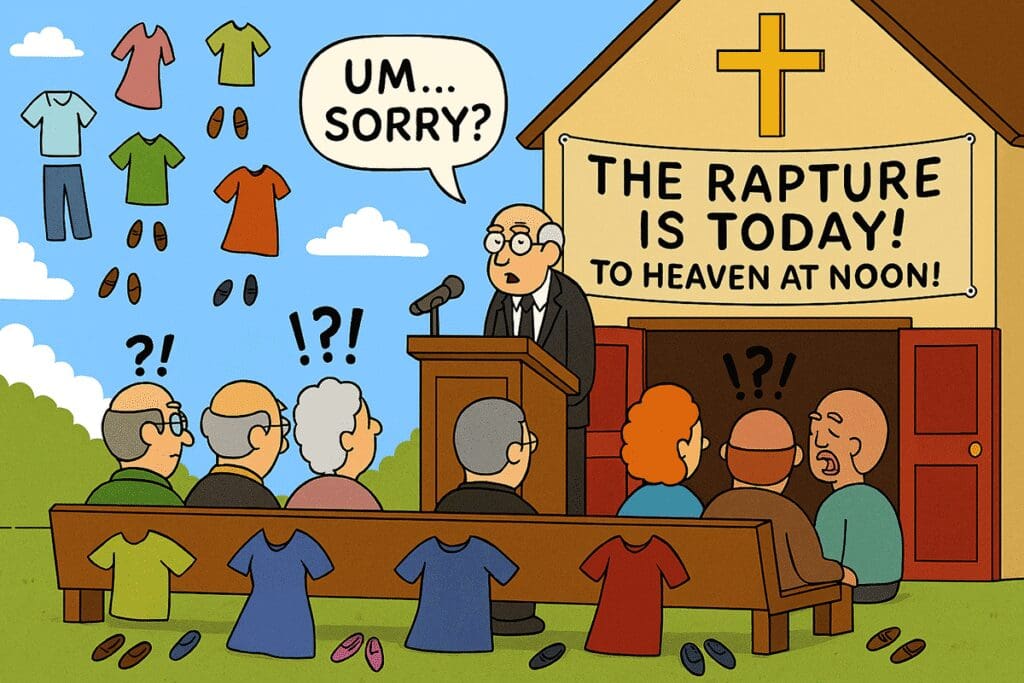
Another rapture alert has come and gone—unsurprisingly, without event. For centuries, self-proclaimed prophets have announced the end of the world. Yet, their predictions collapse under the weight of reality. The marvel is not that these prophecies fail, but that people continue to fall for them.
Why Do People Long for the End of the World?
The persistence of rapture belief raises a deeper question: why are so many drawn to visions of fiery destruction? Among American evangelicals, there is a cultural fascination with the apocalypse. This longing often reflects:
- Fear of uncertainty – the wish for a clear ending to history.
- Religious conditioning – ideas of salvation and judgment taught from childhood.
- A sense of superiority – the belief that one’s group will be saved while others perish.
This anxious wish for the world to end is less about divine truth and more about human psychology.
The Problem with Rapture Theology
The rapture doctrine rests on wishful thinking rather than testable facts. It is built on:
- A fictional savior – The Jesus of rapture prophecy is a construct, not a historical certainty.
- Contradictory morality – If such a figure did exist, would he embrace the cruelty found in the faith? Does this faith truly claim him? Would he accept the prejudice often found there?
- Disdain for creation – How can a creator delight in followers who pray for destruction? They wish for the downfall of his supposed masterpiece: the Earth and the universe itself.
Each failed prophecy is not just a theological misstep—it’s a rejection of the very world believers inhabit.
Why Believers Keep Believing
If rapture predictions have failed “seven times seventy, plus or minus a few billion,” why do believers persist? The answer lies in the psychology of faith:
- Cognitive dissonance – disappointment is reinterpreted as a test of faith.
- Community reinforcement – shared belief strengthens group identity.
- Self-righteousness – failed prophecies are overshadowed by feelings of moral superiority.
In this way, failure becomes fuel for continued belief.
The Only Rapture Worth Striving For
If there is a rapture worth believing in, it is not one of fire and destruction. The only true rapture is the rapture of the mind. It is a rising above meanness, cruelty, and the wish to see others destroyed.
This form of rapture is not promised by prophecy. It must be chosen. And while it never come for many, it is the only rapture worth striving for.
